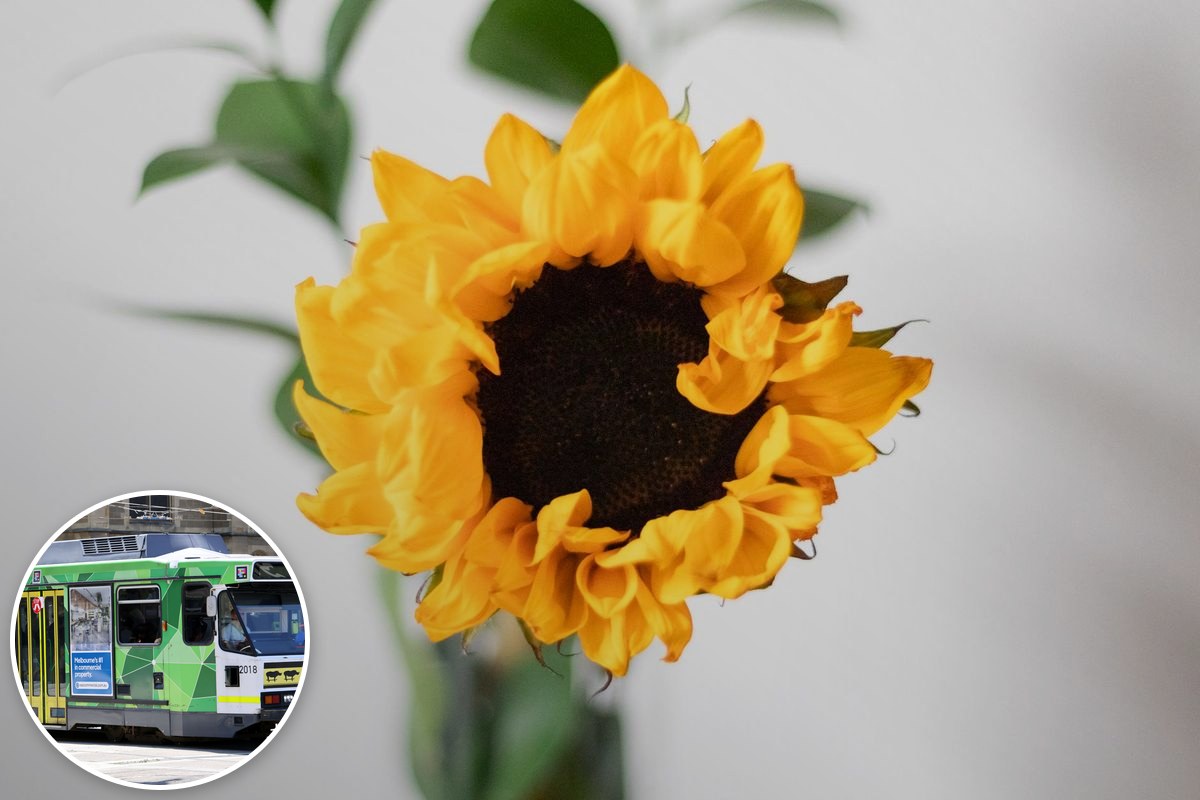
On the days when the world feels heavier, noisier and harder to navigate — on a packed peak-hour tram, in a long queue, or caught in a festival crowd — Rosemarie Walshaw reaches for a bright green sunflower lanyard. It is a small, deliberately understated object, and it is quietly changing how Melbourne treats people whose disabilities you cannot see.
The Hidden Disabilities Sunflower is a discreet signal to those around the wearer that they may need a little more patience. "I wear it when things are a bit overwhelming for me," Walshaw said. "It's a way to say, 'Please be generous with me. I might need a bit of space, I might need some extra care — some grace and more time to think things through.'"
Walshaw is a disability access consultant and former nurse, and the community co-chair of the City of Melbourne's Disability Advisory Committee. The sunflower, she explains, signals disabilities that are not immediately obvious; she has lived with depression and anxiety for most of her life. "For a long time I didn't really want to identify as having a disability," she said. "Not because I was embarrassed or anything, but because I felt like a bit of a fraud, like I wasn't disabled enough."
Her leadership on access brought her to the council's advisory committee in 2015, first on a working group and then as a full member from 2021, before becoming its community co-chair. Along the way, she listened as fellow members spoke openly about how their mental health conditions could be more debilitating — and more stigmatised — than a physical disability.
That reshaped how she thinks about who belongs. "I learnt that disability is not a competition. There is no threshold or diagnosis someone has to meet before they are 'allowed' to belong to the disability community," she said. "The disability community is incredibly diverse. Their needs for access, and their solutions, have influenced the world. I think that's something to be incredibly proud of."
For a city that trades so heavily on its liveability, the sunflower is a low-cost, high-impact idea: a shared cue that lets a stranger offer a seat, a moment's patience or a quieter word without anyone having to explain themselves. It asks nothing of the wearer beyond the choice to put it on, and only a little generosity from everyone else. As Walshaw puts it, everyone wins when Melbourne is more accessible.
The symbol is now recognised in workplaces, airports and public spaces around the world, and Melbourne's embrace of it is part of a broader push toward universal design — the idea that spaces and services built for the widest range of people work better for all of them. "Accessibility, universal design and inclusion have been the focus of both my professional work and advocacy for many years," Walshaw said. On a green lanyard, that philosophy fits in the palm of a hand.