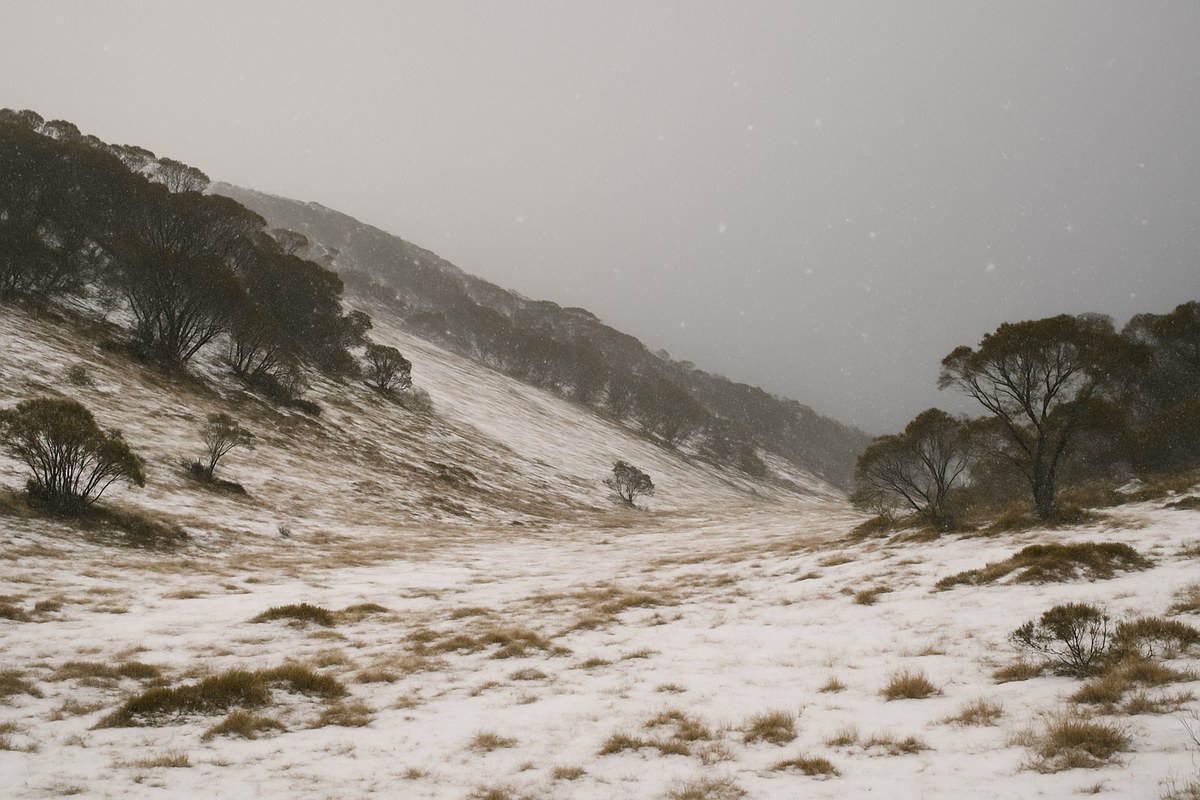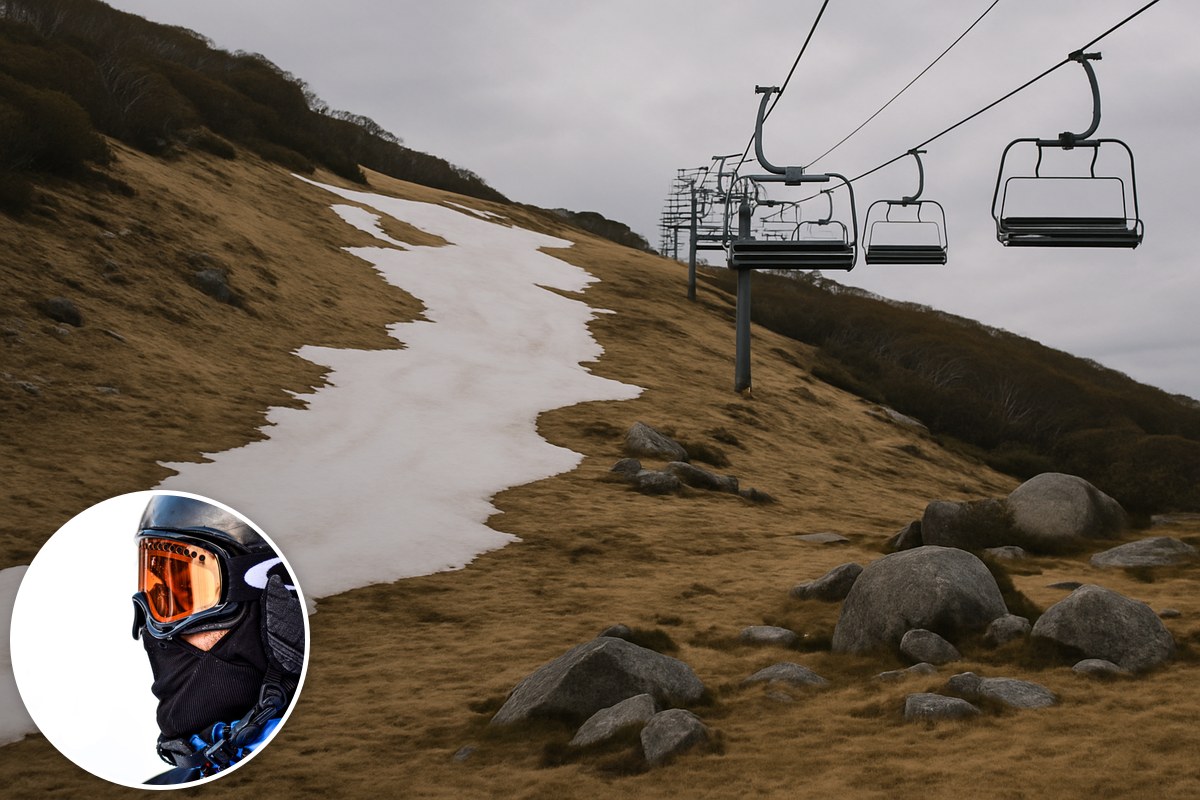
The Australian ski season is packing up weeks ahead of schedule. Mount Baw Baw and Mount Selwyn shut down for the season a fortnight ago, Mount Hotham finishes prematurely this Sunday, and with more heavy rain forecast for the weekend, an ABC analysis by meteorologist Tom Saunders finds it hard to see the remaining majors lasting to the traditional early-October close.
The cause is the winter the high country just had — the warmest on record, and, the analysis notes, "by a fair margin". At Mount Buller, where records run back to 1985, the winter mean of 1.9 degrees cleared the previous record by nearly half a degree, against a long-term average of 0.1. At Cabramurra, the longest-running alpine station, the mean of 4.0 degrees sat well above the 1.8-degree average. Perisher logged an all-time winter record of 14.4 degrees on Saturday, August 29 — a number that belongs to a beach town, recorded at a ski resort in the last days of winter.
The season that never started down low
June set the pattern: unseasonably warm and wet, and when it wasn't raining, mostly too warm for snowmaking. One statistic carries the whole story — of the 301 millimetres of precipitation Perisher Valley recorded from June 1 to July 2, just 25 millimetres fell below zero degrees. July built a base on the higher slopes but never gave the lower runs full cover; August brought more rain and a major melting event. Snow peaked two weeks earlier than average, at historically low levels. The verdict: for the higher elevations, the worst natural-snow season since 2006 — for the lower slopes, the worst on record.
The industry's counterweight is machinery. Snow Resorts Australia CEO Josh Elliott said continued investment in snowmaking and snow management had kept "skiing, snowboarding and snowplay" available across NSW, Victoria and the ACT since the June long weekend. But as the analysis puts it, even extensive snow curation eventually lost out to the elements.
The trend under the season
Lean winters are not new — 1973 and 1982 were both poor — but the direction of travel is the story. At Three-Mile Dam, at 1,460 metres, peak annual snow depth averaged 55 centimetres between 1955 and 2000; over the past 25 years it has averaged 34 — a 38 per cent drop. Buller is down 21 per cent over the same comparison, Spencers Creek down 13. The snowline, in short, is rising: more winter precipitation now falls as rain, and above-freezing days melt what lands between storms. Projections cited in the analysis point to peak snow depths at the major resorts falling by more than half by 2050, relative to the late 20th century — even under a low-emissions scenario.
This is the alpine chapter of the winter Melbourne already knows about: the city tied its own warmth record while Victoria as a state set one outright. In the mountains, the record came with a margin — and a closing date. Three of the past four seasons have now been very lean ones. The chairlifts stop early on Sunday at Hotham; the argument about what that means runs a lot longer.