The world's leading penguin researchers met this week at the 12th International Penguin Conference on Phillip Island, in Victoria's south-east, the ABC reports — and at the end of the week-long gathering they released a statement calling for "decisive conservation action" to protect penguins and their habitats.
The statement doesn't read like conference boilerplate. "When penguins struggle we should pay attention. Their warning is about the health of our oceans and ultimately the health of our planet," it says. And then: "Penguins cannot tell us in words that their world is changing. They are showing us." The call to action lands as the United Nations warns the world will breach the 1.5 degrees Celsius warming benchmark within the next five years.
Andre Chiaradia, senior scientist at Phillip Island Nature Parks and chair of the conference, said penguins face a growing combination of pressures. The birds depend on healthy oceans to survive, he said, and changing oceans could affect where penguins feed, when they breed, how they raise their chicks and whether their populations grow or decline. A major concern is ice shelves melting at a "scary, fast pace". "Those places are disappearing, then there's no place for them to breed," he said.
A colony under its own cloud
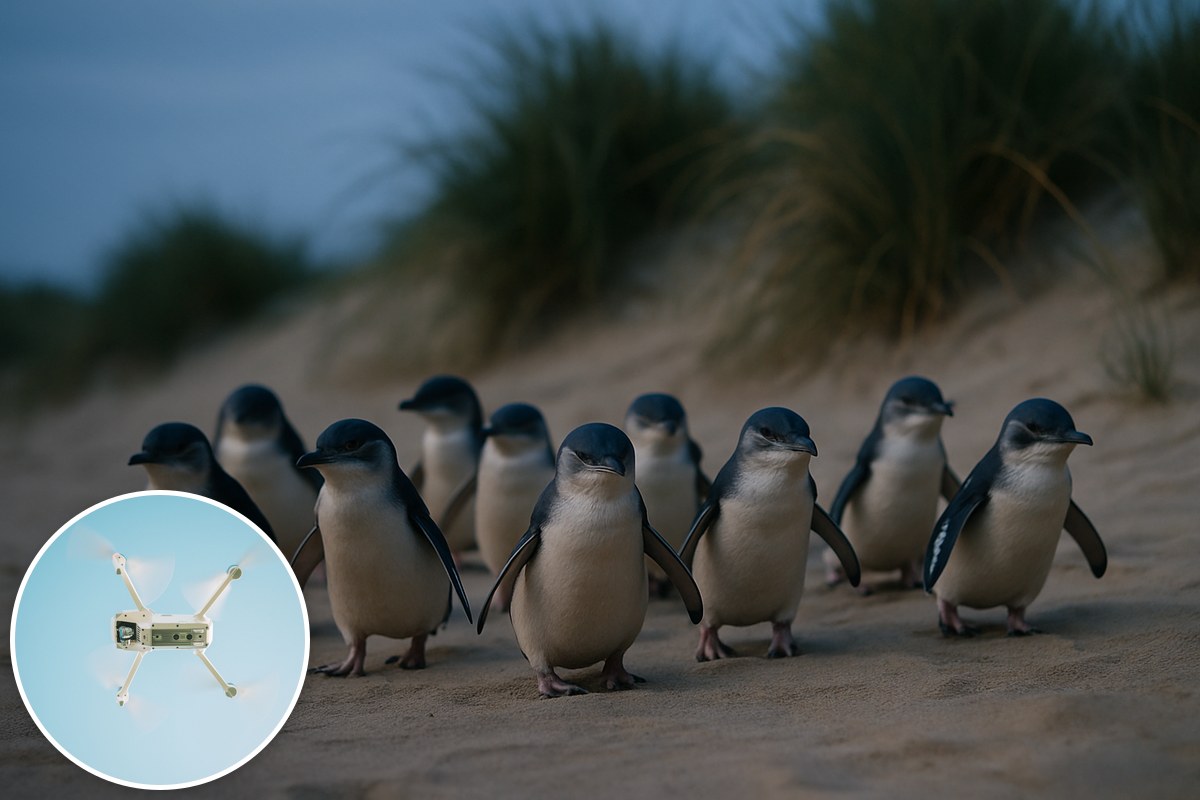
Phillip Island is home to about 40,000 little penguins — the world's largest colony — and this year's conference followed the death in August of a little penguin on the island from H5 bird flu. More than 1,500 penguins have now been vaccinated against the disease, part of the government's plan to vaccinate 5,000 of the birds at Phillip Island and St Kilda. The virus's spread through Victoria reached mammals this week, with a confirmed case in a fox at Torquay.
Chiaradia put the outbreak in a larger frame: "Penguins are suffering from a thousand cuts so [bird flu] is just an extra cut on penguins' lives." What could strengthen the birds' resilience, he said, is sustainable fisheries, protecting critical feeding and breeding habitats, effective predator management and long-term monitoring.
For Meagan Dewar, a biological sciences lecturer at Federation University and a speaker at the conference, the timing was the point. "It's very important to have so many penguin experts here in the one place as Australia is facing H5N1 outbreaks," she said. Many of the visiting experts come from places that have already been through it — South America, South Africa and the Antarctic — and Australian researchers, she said, could learn from their experience of monitoring the disease and managing outbreaks. "It's a great time to share knowledge."
Counting penguins from the sky
The gathering also compared tools. Brett Buzzanga, a US geospatial scientist and conference speaker, works with drones equipped with thermal cameras to detect penguins living underground — a better picture of populations and how they change over time. "As with the rest of the world, AI is a big player in being able to classify different images, being able to recognise different patterns in the data," he said. "A lot of the tech unlocks the potential to expand those regions, expand science, expand conservation."
What the delegates shared, in Mr Buzzanga's telling, ran deeper than data: "There's a shared language, the shared language of science, the shared language of penguin conservation that everyone wants to collaborate with each other regardless of national borders." Chiaradia's version of optimism was more conditional: "If we do what we can … then we can probably provide a brighter future for penguins."