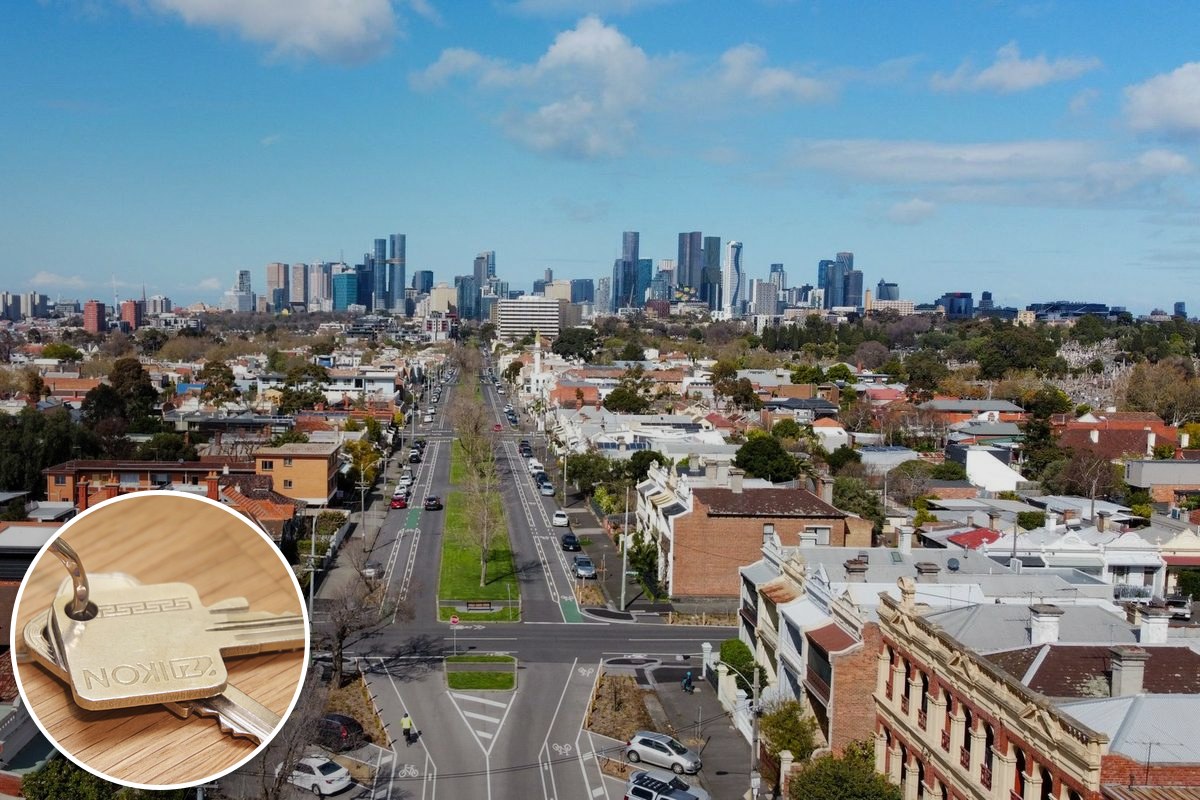
Melbourne renters are paying more than ever, and yet the market has rarely felt this flat. Domain's June quarter Rent Report puts the city's median asking rent at a record $600 a week for houses and the same $600 for units — but houses moved just $5 across the quarter, and units did not move at all.
That stillness is the story. Unit rent growth has slowed to its weakest annual pace in four and a half years, leaving Melbourne one of the country's weakest-performing rental markets for the quarter — an odd label for a city where the headline number is still a record.
Domain's chief residential economist, Dr Nicola Powell, framed it as a market that has stopped moving as one. Pricing is now "increasingly driven by local conditions and landlord expectations", she said, with Melbourne's slower growth reflecting how "affordability constraints are becoming a bigger influence than ever".
The supply side looks similarly steady. SQM Research had Melbourne's rental vacancy rate at 1.6% in June, unchanged from May, with 8,640 vacant rentals across the city. Nationally the rate ticked up to 1.3% from 1.2%, with vacant dwellings climbing to 39,229.
By national standards that makes Melbourne comparatively comfortable. Sydney also sits at 1.6%, but Perth has tightened to 0.6% and Darwin is holding at 0.3%, the tightest market in the country by a wide margin. "While the national vacancy rate has edged up to 1.3%, Australia's rental market remains exceptionally tight by historical standards," SQM Research managing director Louis Christopher said.
Rents elsewhere tell a different story again. Nationally, advertised rents fell 0.4% over the past month but remain 8.1% higher than a year ago, averaging $697.43 a week. Set against Sydney's $850 median for houses — up $50 in the quarter — and Brisbane's $700, Melbourne's $600 starts to look almost restrained.
For renters, a record that is not really rising is still a record: $600 a week is the going rate for a Melbourne house or unit, and vacancy near 1.6% is not a market handing out bargains. But the direction has changed. After years of rents climbing faster than pay packets, Melbourne appears to have run into the ceiling of what tenants can actually afford — and for now, that ceiling is holding.