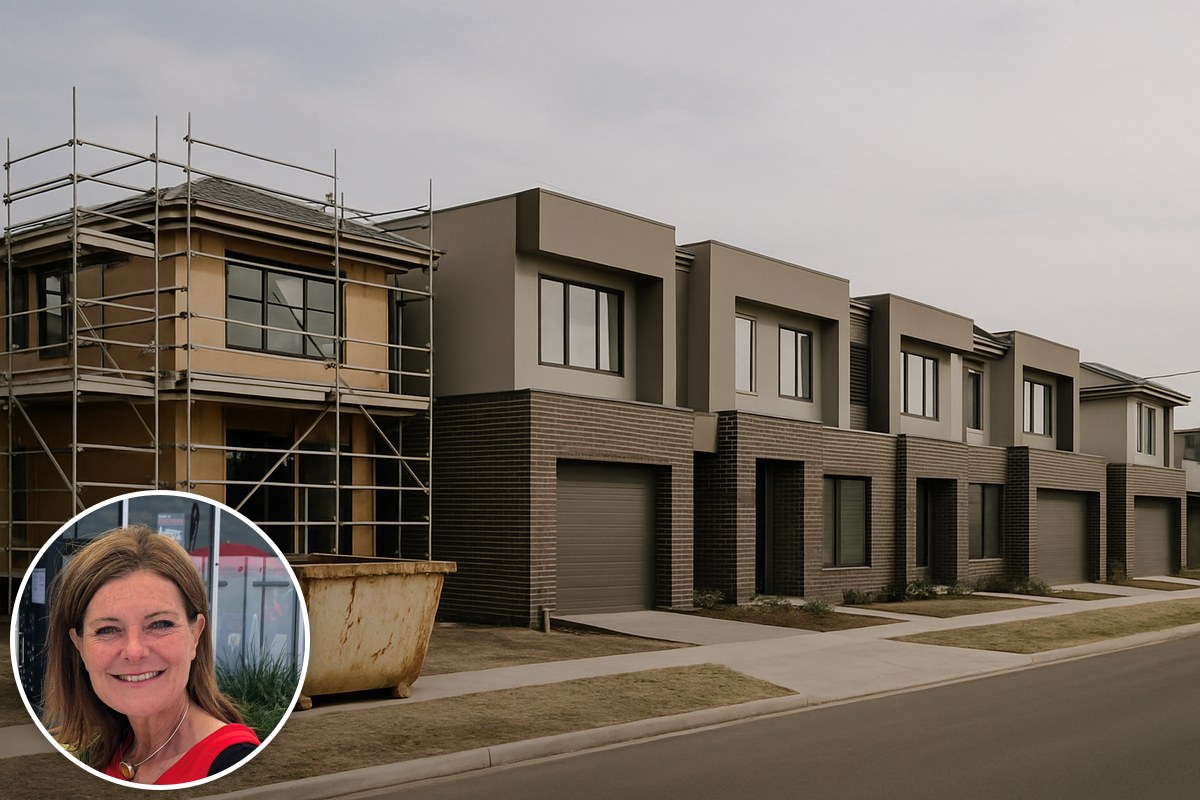
From next month, a Victorian landowner who wants to put up to four homes on a single block will be able to get planning approval in 10 business days — down from a process that can currently run past two months — under a change Planning Minister Sonya Kilkenny announced on Wednesday. The catch for objectors is the point: "Four homes that comply with the townhouse code will be approved in 10 days," Ms Kilkenny said. "Council will not be able to object to the planning application."
The move extends a formula the government says has already worked once. Last year's 10-day process for splitting a block in two prompted, by the government's account, a 50 per cent jump in applications for townhouses and low-rise developments. "It's a small step, but it's going to make a difference," the minister said of the sequel.
The other door Labor opened
The party's new platform carries a line with a much bigger price tag on it: Victorian Labor will "consider the effectiveness" of stamp duty — a tax forecast to bring in $10 billion this financial year. Labor has already abolished it for homes under $600,000, with reduced rates to $750,000. The Age notes the hedge that matters: the platform, foreword by Premier Ben Carroll notwithstanding, is a party document written with stakeholders and does not necessarily represent future government policy.
A room full of developers, an election in the room
Ms Kilkenny made the announcement at a housing debate hosted by the Australian Property Developers Association, sharing a stage with the opposition's David Southwick, One Nation's Warren Pickering and Family First's Alex Van Der End, with Michael Rowland moderating. The Age's read of the room: Southwick and Pickering drew the warmer reception from the developer crowd than the minister of nearly four years — whose government pledged 800,000 homes over a decade in 2023 and has been building at roughly 50,000 a year since, against an 80,000 target. Her defence ran on attributed superlatives: Victoria as the fastest-growing economy of the past decade, one in three Australian first home buyers, the most affordable homes and rents — her claims, made to a room The Age read as warmer to her rivals.
The Coalition's counter-offer: abolish stamp duty on homes up to $1 million, guarantee no new or increased property-industry taxes, boost greenfield supply and let buyers choose. "If people want to live in an apartment in inner Melbourne, then great," Mr Southwick said, arguing the activity-centres plan was "trying to redirect people" rather than following demand. "I think it's important for the market to dictate that."
Mr Pickering pitched One Nation's now-familiar deregulation note — "we're seeing red, blue, black and green tape become an impediment to all projects across the state" — proposing a "two-out-one-in" rule on regulation. Asked whether the party had modelled the cost of rolling back all property taxes, he said it lacked the resources the major parties have.
The fast-track lands as the fourth distinct policy pitch of the election week, after Labor's roads package, One Nation's energy launch and the Liberals' hybrid trains — and it is the only one of the four that takes effect before anyone votes. From October, the 10-day clock starts; the argument about everything else runs to November.