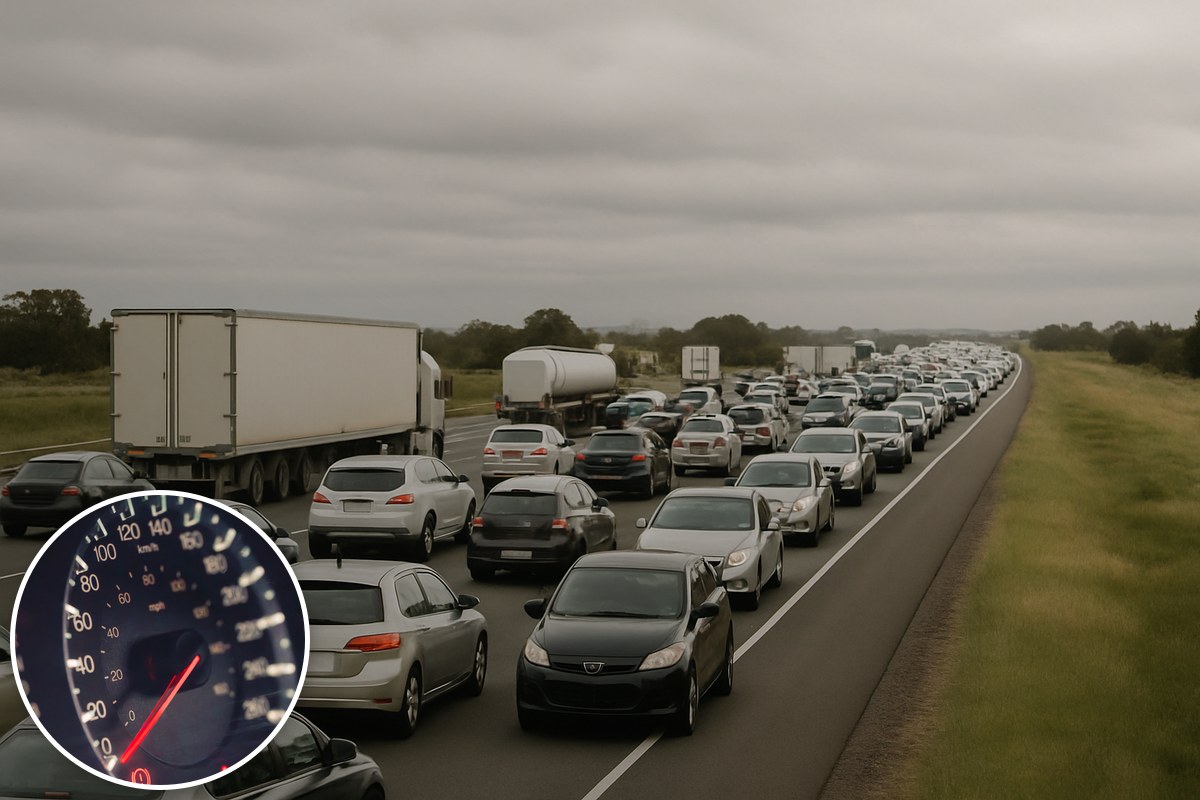
Traffic congestion in Melbourne's outer west is the target of Labor's latest pledge before November's state election: $550 million to upgrade the Western Freeway, the ABC reports. The money covers the section between the fast-growing areas of Melton and Caroline Springs, and comes on top of $1 billion promised by the Commonwealth government ahead of the 2025 federal election.
The plan upgrades the interchanges at Ferris Road, Leakes Road and Hopkins Road, and builds a new half-interchange at Mount Cottrell Road to give local traffic direct access on and off the freeway. The road itself gets wider: three lanes in each direction between Ferris Road and Hopkins Road, and four in each direction between Hopkins Road and Ballarat Road. Once the upgrade is complete, the speed limit will be 100km/h the whole way from Ferris Road to Ballarat Road.
"I said as a new premier my first task is to listen to what Victorians' needs are," Premier Ben Carroll said. "They told me very clearly they wanted a relentless focus on the basics and there was nothing more important than getting our road infrastructure right and making sure hard-working Victorians can spend less time in traffic and get to spend more time with their families." Planning is already underway with the federal money, Mr Carroll said — the new promise represents Victoria "coming to the table as well".
The corridor that keeps outgrowing its roads
The freeway carries tens of thousands of commuters each day, and Melton City Council has spent the run-up to the election advocating for new train stations and major road upgrades to ease pressure on existing railway stations and the busy freeway section. The Western Freeway upgrade sits among a suite of road improvements the council has called for as the area's population grows by 6.61 per cent a year — more than triple the Melbourne average of 2 per cent.
The council's advocacy documents don't dress the problem up: "major arterial roads in the City of Melton are not suitable for the existing high volume of traffic," they state. "They are predominantly of a rural standard with unsealed shoulders, no public lighting, open drains and non-existent bike and pedestrian paths."
The Coalition's counter: $10,000 to move to the country
The opposition spent the same weekend pitching to a different map. Under the Liberal-National Coalition's proposed Victorian Rural Health Workforce Incentive Scheme — costed at $40 million over four years — doctors, nurses, dentists, midwives and other allied health professionals would be offered incentives of up to $10,000 to fill positions in regional and rural Victoria, with a similar amount offered each year the worker stays. The model is based on one already operating in New South Wales.
Opposition leader Jess Wilson said regional Victorians — whose doctors walked off the job for the first time in 20 years last week — deserved access to healthcare professionals with "much-needed experience". "They deserve to access healthcare close to home," Wilson said. The Coalition also pledged to build accommodation for healthcare workers into new regional hospital developments, such as the West Gippsland Hospital and the Mildura Base Public Hospital.
Two announcements, two electorates: Labor bidding for the outer-west commute, the Coalition for the country health vote. The freeway pledge is the bigger cheque — and for the tens of thousands of commuters on that stretch each day, the more literal promise of moving faster.