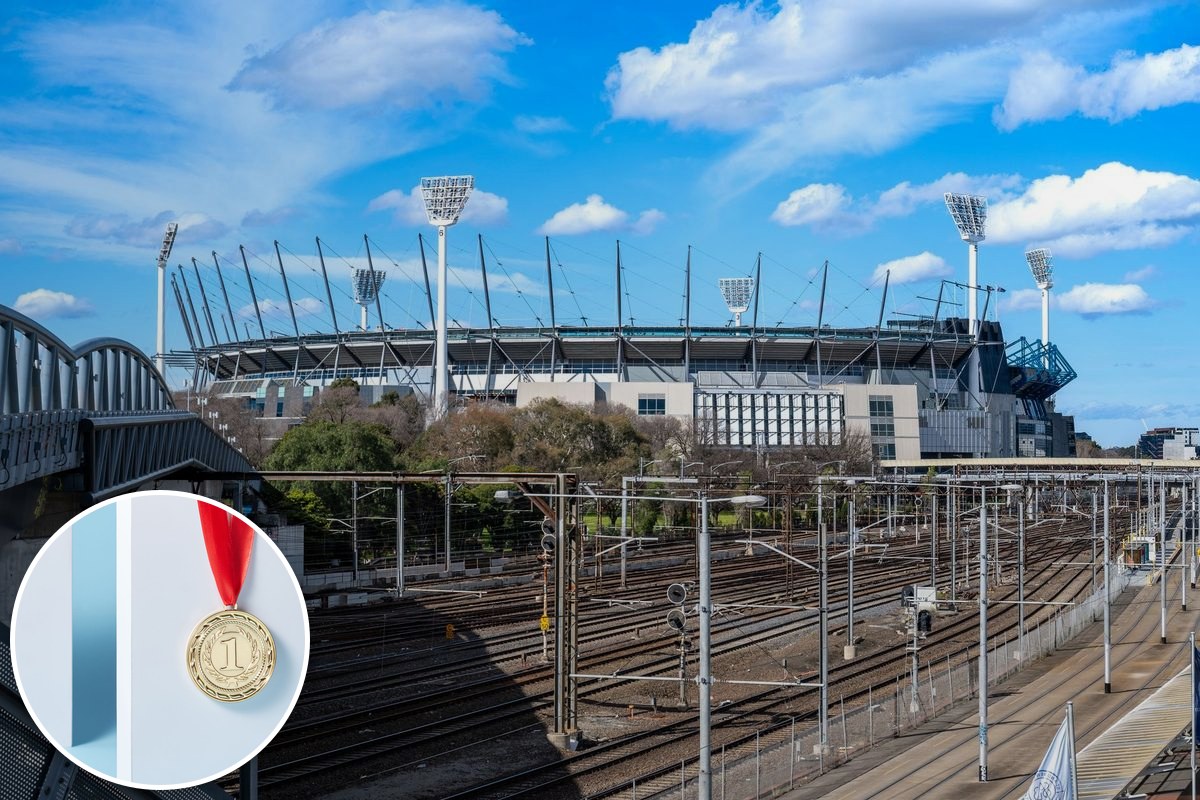
Seventy years to the day after the opening ceremony of the 1956 Olympic Games, Dawn Fraser has come back to the Melbourne Cricket Ground for a lunch on Sunday to mark the anniversary, ABC News reported.
Fraser, 89, had to miss a commemorative 1956 Olympics dinner in Melbourne a few weeks ago because of a health issue. She says she will go from table to table in her wheelchair to meet old friends and make new ones.
"I would love to be there at '32, to support our athletes," Fraser told AAP. She said some of the athletes coming to the lunch were 95 and 99. "If they can do it, I can do it."
A teenager from Balmain
Fraser was 19 when she won the 100-metre freestyle in Melbourne, and she was also part of the 4x100 women's freestyle relay team that won gold. Until then she had only swum against other Australians.
"To win a gold medal was something out of this world. You didn't think about it until a month later, that you were the best swimmer in the world," she said. She went on to become the first of only four swimmers to win gold in the same individual event at three successive Olympics.
Two days after the reunion, the Sport Australia Hall Of Fame annual dinner will feature the Dawn Award. But Fraser said she was just one of the Olympians in the room. "I'm an athlete among athletes, and I'm very proud to be among the athletes who I met and competed against in 1956," she said.
103,000 at the opening
According to the MCG, 103,000 people watched 19-year-old Ron Clarke carry the Olympic torch into the stadium and light the cauldron, burning himself in the process. John Landy took the Olympic oath and Merv Wood carried the Australian flag. They were the first Games held in the Southern Hemisphere.
Australian women dominated the track. Betty Cuthbert won the 100m and 200m, Shirley Strickland won the 80m hurdles in an Olympic record, and the pair joined Norma Croker and Fleur Wenham to win the 4 x 100m relay. Across the 15 days, 1,153,000 people visited the ground, an attendance record the MCG says still stands.
For the first time, athletes from every nation walked together at the closing ceremony instead of marching in national teams. The MCG says the idea came from John Ian Wing, a 17-year-old Melbourne apprentice carpenter, and it helped cement the reputation of the Friendly Games.
Cobbled together
Writing in The Age, Michael Gleeson says the Games were "hastily cobbled together". In August, barely two months out, organisers were still short of cooks until 10 arrived at the last minute from a shipping line, and it was never certain the MCG would be the main stadium.
The Games opened 18 days after Soviet tanks rolled into Budapest. Overseas they are better remembered for the "blood in the water" water polo clash between the Soviets and Hungarians than for anything Dawn Fraser or Murray Rose achieved in the pool, Gleeson writes.
Historian Nick Richardson, author of the book 1956, called the Games "the inflexion point" for the city. "It pulled together these threads of identity and assertion of character," he told the paper.
More than 30 objects from Melbourne 1956, including Cuthbert's medals and the original cauldron, are on show in the Olympic Gallery at the Australian Sports Museum at the MCG.