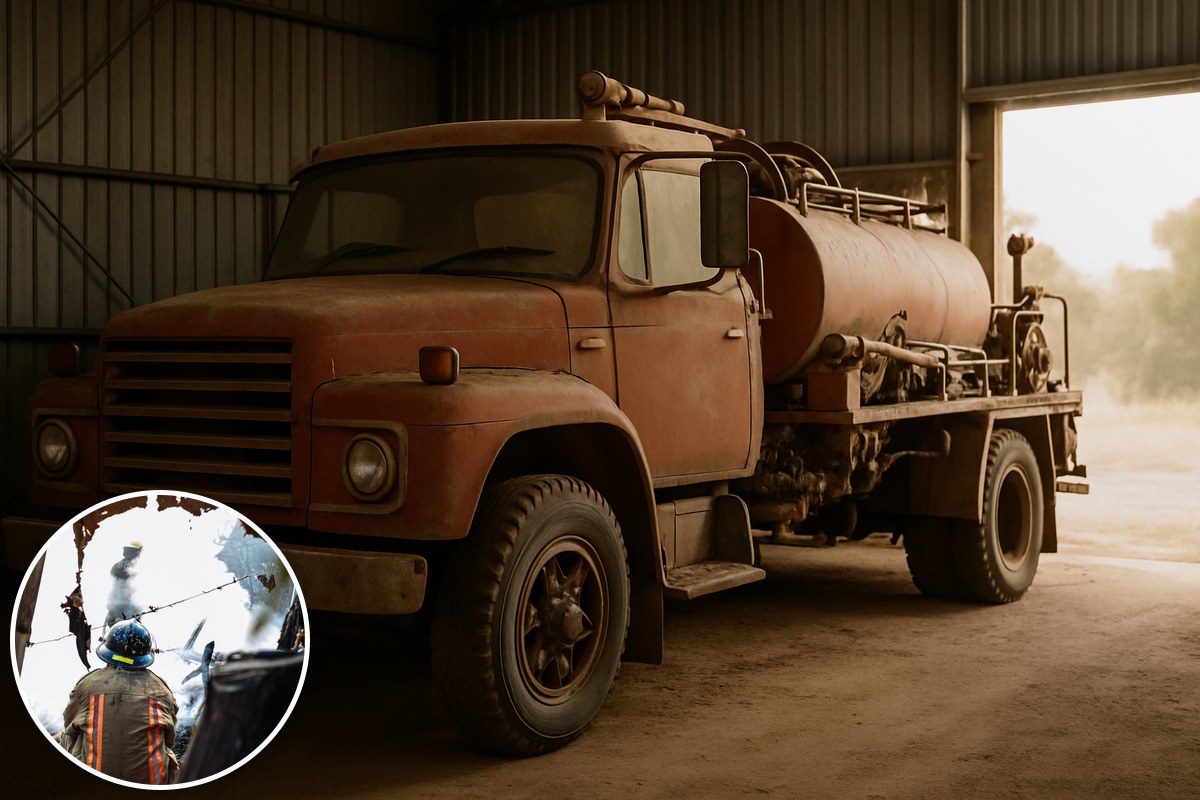
WorkSafe Victoria is "making inquiries" into the Country Fire Authority's ageing truck fleet, the ABC reports, after the CFA Volunteers Group went to the regulator in May asking for an investigation into the authority's single-cab tankers. Inspectors have already met CFA leadership at Melbourne headquarters and visited several regional brigades; the CFA is reportedly providing information and access to its appliances.
The group's president, John Houston, said years of calls for funding and better equipment had fallen on deaf ears, which is what sent the volunteers to the workplace regulator. "We have to recognise these trucks are no longer fit for purpose and are no longer safe," he said. "We believe that these concerns deserve some kind of independent scrutiny. It seemed to be the only course of action we could get some response from."
Three in the cab, the rest on the back
The complaint centres on the single-cab tanker, which seats three crew inside; a modern dual-cab carries up to six. Mr Houston said the older trucks pose a risk both to the volunteers who ride on the back and to those in a cab with no air conditioning. The group says the backlog of out-of-date tankers has been growing steadily for a decade.
Exhibit A sits in a shed at Muckatah: a two-wheel drive, single-cab tanker built in July 1989 — 37 years old, and 17 years past its nominal use-by date. It is the oldest CFA tanker in service. "Late last year we had an issue with the pump on our tanker, which essentially blew up," brigade captain Glen Hamson said. "We were essentially without the tanker for four or five months." The truck is excluded from strike team duties, which limits the brigade's part in wider firefighting efforts, and Mr Hamson says there is no clear timeline for replacing it.
What the numbers show
The CFA does not publish clear figures on its rolling replacement program, but the volunteers' group's own data tells a story: 225 new primary tankers were registered to regional brigades between 2016 and 2025 — against 453 delivered in the ten years before that. The fleet in question is about 1,400 primary tankers spread across 1,209 regional and peri-urban brigades, CFA-owned and state-funded, distinct from the tankers brigades buy themselves with government help.
"A new truck every four days"
Emergency Services Minister Paul Edbrooke acknowledged the tankers have a life span and said he was open to talking. "If the CFA chief officer wants to talk about how we maybe manage the fleet, I'm more than open to those discussions," he said last week, adding: "Certainly, as a former CFA volunteer, the trucks that are there now are light years ahead of the trucks that I was driving around in under a former government." A government spokesperson went further, saying the CFA was "stronger, better funded and better resourced under Labor", with a new truck rolling out every four days and new infrastructure funding for every CFA region in the latest budget.
The volunteers have been building their paper trail regardless. Earlier this year the group put a submission to the bushfire inquiry covering funding, outdated tankers, volunteer retention, communications and roadside fuel loads. Now the regulator is in the sheds too — and with the fire season approaching, the question of what those inquiries find has a deadline no politician set: summer.